
 Rear-Impact Collisions: The Whiplash Connection
 Rear-Impact Collisions: The Whiplash Connection
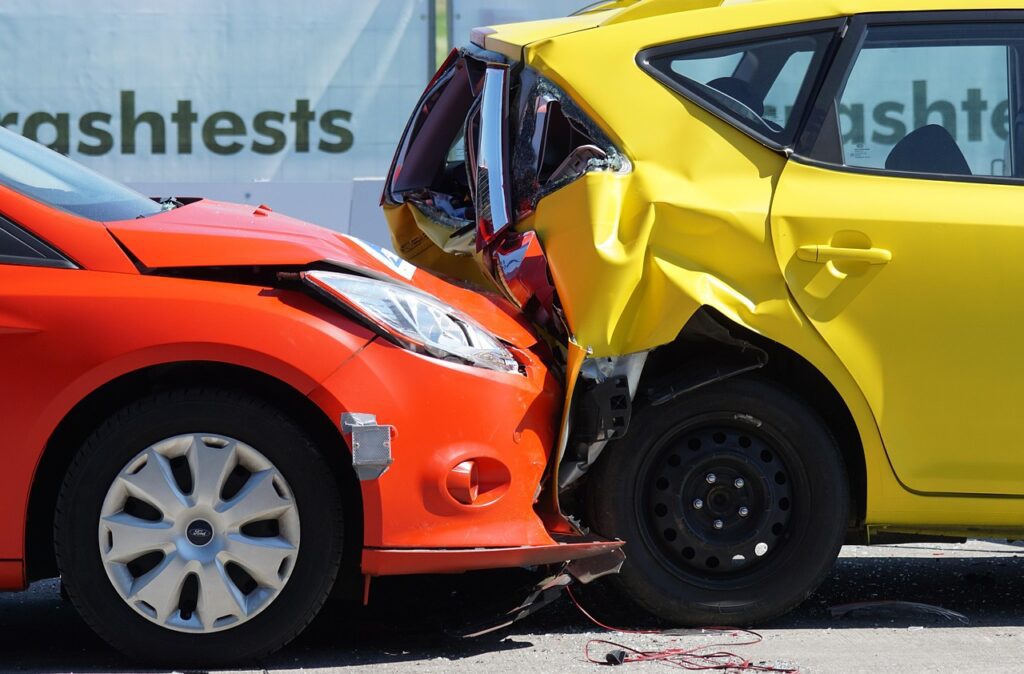
Rear-end impacts are the classic “whiplash” crash. Your torso is thrust forward while your head lags behind, creating rapid hyperextension and flexion through the cervical spine. Even at low speeds, this motion strains the neck ligaments, muscles, and facet joints, producing stiffness, headaches, and shoulder tension.
Peer-reviewed research confirms that even low-velocity rear impacts can generate significant soft-tissue injury. Kubo et al. (2021) demonstrated that repeated, rapid loading alters muscle–tendon mechanical properties, contributing to persistent pain and reduced elasticity — findings that help explain chronic whiplash symptoms.
At Aquarius Chiropractic, your Vancouver MVA chiropractor uses gentle spinal adjustments and soft-tissue therapy to restore proper cervical movement and relieve the muscle guarding that drives neck pain after collision.
For an overview of whiplash diagnosis and management, see StatPearls – Cervical Sprain (Whiplash).
Side-Impact Collisions: When the Force Comes from the Side
 Side-Impact Collisions: When the Force Comes from the Side
Side or “T-bone” collisions are particularly dangerous because there’s less vehicle structure to absorb the energy. The force transfers directly into the shoulder, rib cage, and pelvis, producing both bony and soft-tissue injuries.
Biomechanical analysis by Yoganandan et al. (2007) found that side impacts carry a high risk of thoracic and pelvic trauma because lateral loading compresses the chest wall and abdomen. The NHTSA Crash Injury Research Program also reports that lateral forces lead to increased rib and internal organ injury risk, even at moderate speeds.
After a side-impact crash, chiropractic care focuses on restoring motion in the rib articulations, thoracic spine, and shoulder girdle, which often become stiff and painful. Your Vancouver car accident chiropractor uses controlled spinal mobilizations and myofascial release to improve breathing mechanics and posture disrupted by side-loading forces.
Frontal-Impact Collisions: The Forward Jolt

 Frontal-Impact Collisions: The Forward Jolt
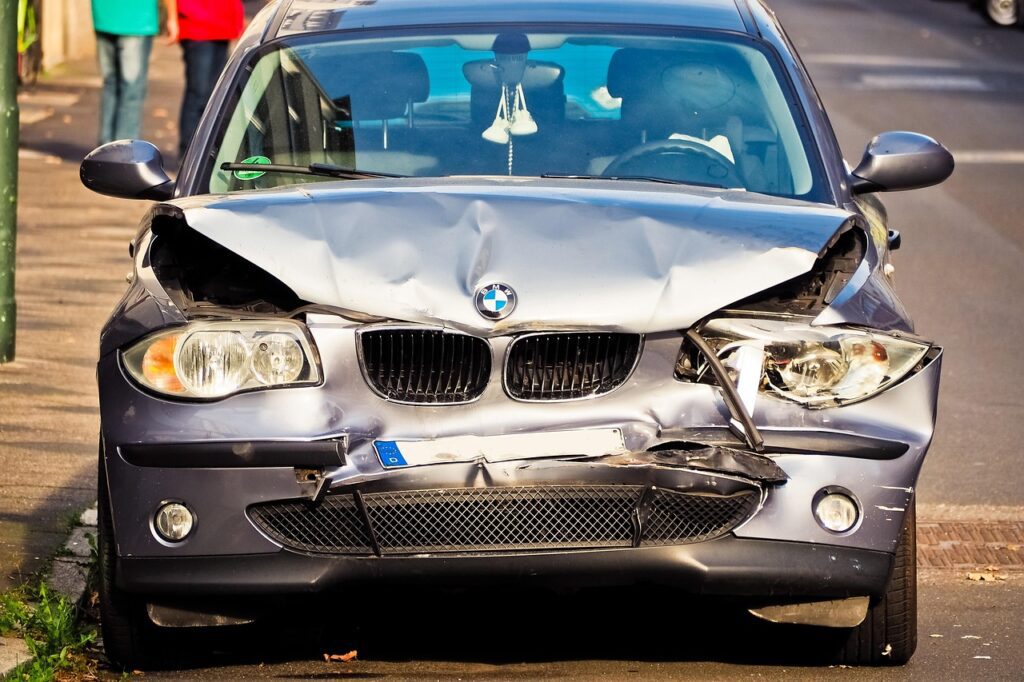
Front-end collisions create a strong deceleration that drives the head, chest, and knees forward. This motion can strain the neck, compress the spine, and even cause the knees to strike the dashboard, producing hip, knee, or low-back injuries.
A comprehensive review of frontal-impact biomechanics by Ammori & Abu-Zidan (2018) found that the lower limbs are common injury sites due to dashboard contact, while cervical and lumbar joints experience shear and compressive stress.
At Aquarius Chiropractic, your Vancouver MVA chiropractor provides customized care to each patient. Chiropractic adjustments restore spinal joint motion, while targeted soft-tissue therapy reduces inflammation and rehabilitates the muscles surrounding the spine and hips.
Oblique or Angled Collisions: Complex, Multi-Directional Injuries
 Oblique or Angled Collisions: Complex, Multi-Directional Injuries
Oblique crashes combine forward and lateral forces, producing complex twisting of the spine and torso. Because rotational energy is high, neck, mid-back, and shoulder injuries often overlap.
Research by Torres-Ariza et al. (2024) highlights that oblique impacts generate greater rotational accelerations than pure frontal or side impacts, leading to more diffuse soft-tissue involvement.
Your Vancouver car accident chiropractor can address this multidirectional trauma with segment-specific chiropractic adjustments, guided mobility exercises, and instrument-assisted soft-tissue mobilization to restore balanced movement.
Low Velocity vs. High Velocity: Why Speed Isn’t Everything
 Low Velocity vs. High Velocity: Why Speed Isn’t Everything
It’s a common misconception that minor accidents can’t cause injury. Even at low speeds (under 15 km/h), the body absorbs sudden acceleration that may cause microscopic ligament and muscle tears. Studies of rear-impact volunteers show that whiplash-associated disorders can develop even with small delta-V impacts because of rapid cervical muscle reflexes and joint shear loading (Yoganandan et al., 2007).
In high-velocity crashes, the forces multiply exponentially, producing a combination of soft-tissue, joint, and sometimes skeletal injuries. The NHTSA’s 2022 Traffic Safety Facts report demonstrates that injury severity rises dramatically with each increment of speed.
Whether low or high velocity, early conservative care from a Vancouver MVA chiropractor helps manage inflammation, prevent chronic stiffness, and support tissue remodeling for faster recovery.
How Chiropractic Care Promotes Recovery
 How Chiropractic Care Promotes Recovery
The body heals best when joint mechanics, circulation, and soft-tissue balance are restored. Chiropractic care addresses these through a multimodal approach:
Spinal Adjustments: Controlled manipulations restore normal motion to spinal segments affected by trauma. Systematic reviews, including Rubinstein et al. (2011), support spinal manipulative therapy as an effective treatment for chronic neck and low back pain.
Soft-Tissue Therapy: Myofascial release, trigger point therapy, and instrument-assisted mobilization relieve adhesions, reduce muscle tension, and improve circulation in injured fascia and muscles.
Rehabilitation Exercises: Targeted movement and postural retraining help stabilize the spine and prevent recurrence. Clinical guidelines favor a combined program of manual therapy and exercise (Cochrane Review, 2023).
At Aquarius Chiropractic, this integrated care helps patients move better, heal faster, and avoid chronic pain.
Why Choose Aquarius Chiropractic in Yaletown
 Why Choose Aquarius Chiropractic in Yaletown
Located in the heart of Yaletown, Aquarius Chiropractic provides comprehensive care for patients recovering from motor vehicle accidents. Our evidence-based approach blends chiropractic adjustments, soft-tissue care, and rehabilitative exercise to restore mobility and confidence.
Your Vancouver car accident chiropractor will assess and identify compensations that can delay healing. Combining adjustments with soft-tissue therapy leads to lasting improvements in posture, strength, and comfort.
Each crash vector: rear, side, front, or oblique produces distinct injury patterns. Whether your collision was low or high speed, early assessment by a Vancouver MVA chiropractor can prevent minor injuries from becoming chronic.
At Aquarius Chiropractic, we help you regain mobility, reduce pain, and feel confident returning to your daily life.